Are Social Security benefits taxed as ordinary income?
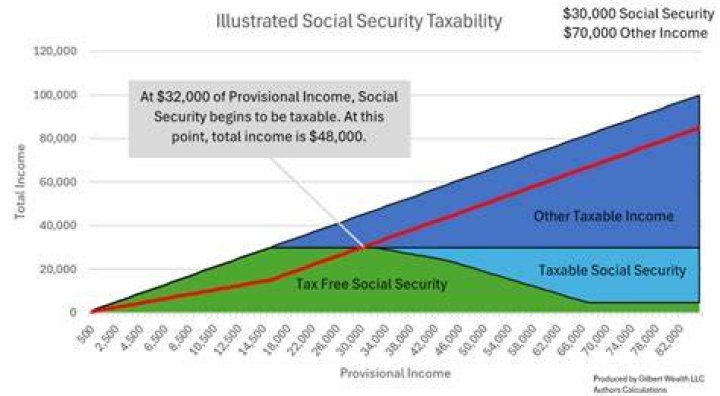
For combined income between $25,000 and $34,000, up to 50 percent of Social Security benefits may be subject to ordinary income taxes. For income above $34,000, up to 85 percent of benefits may be taxed. For married filing jointly, the first $32,000 isn’t taxed.
Is Social Security taxable after a certain age?
Are Social Security benefits taxable regardless of age? En español | Yes. The rules for taxing benefits do not change as a person gets older. Whether or not your Social Security payments are taxed is determined by your income level — specifically, what the Internal Revenue Service calls your “provisional income.”
When do Social Security benefits have to be taxable?
Up to 85% of a taxpayer’s benefits may be taxable if they are: Filing single, head of household or qualifying widow or widower with more than $34,000 income. Married filing jointly with more than $44,000 income. Married filing separately and lived apart from their spouse for all of 2019 with more than $34,000 income.
Is there a tax bracket for Social Security?
Yes, a portion of your Social Security benefits may be subject to federal taxation using tax brackets. Your tax bracket is determined by your net taxable income as shown on line 43 of Form 1040.
Do you have to pay taxes on Supplemental Security income?
Supplemental Security Income (SSI) is never taxable. If you do have to pay taxes on your benefits, you have a choice as to how: You can file quarterly estimated tax returns with the IRS or ask Social Security to withhold federal taxes from your benefit payment. Are Social Security benefits taxable regardless of age?
How is provisional income calculated for Social Security?
The provisional income between $32,000 and $44,000 (joint) is taxed according to the pre-93 rules at 50% Provisional income – 32,000 x .5 = taxable social security * Provisional Income (PI) is calculated as the AGI Less Social Security benefits plus Tax-Free Interest, plus 1/2 Social Security benefits.
